


Beach camping in Musandam has a way of settling you down almost immediately. The boat ride from Khasab isn’t long, but the change feels quick: the cliffs rise in that familiar Musandam way, the water calms, and everything behind you fades out. When you step off the boat onto the sand, the whole place feels untouched, as if it’s been sitting there quietly for years. Some people wander around without saying much, others drop their bags and take in the view, and a few simply stand for a moment because the light keeps shifting across the rocks.
As afternoon moves toward evening, the beach warms up in color. The team starts preparing dinner on the grill, and the smell drifts across the sand long before the food is ready. People sit near the fire, closer to the water, or wherever they feel comfortable. No one rushes. Once the sun disappears, the sky turns dark quickly. With no lights around, you start seeing stars you don’t usually notice.
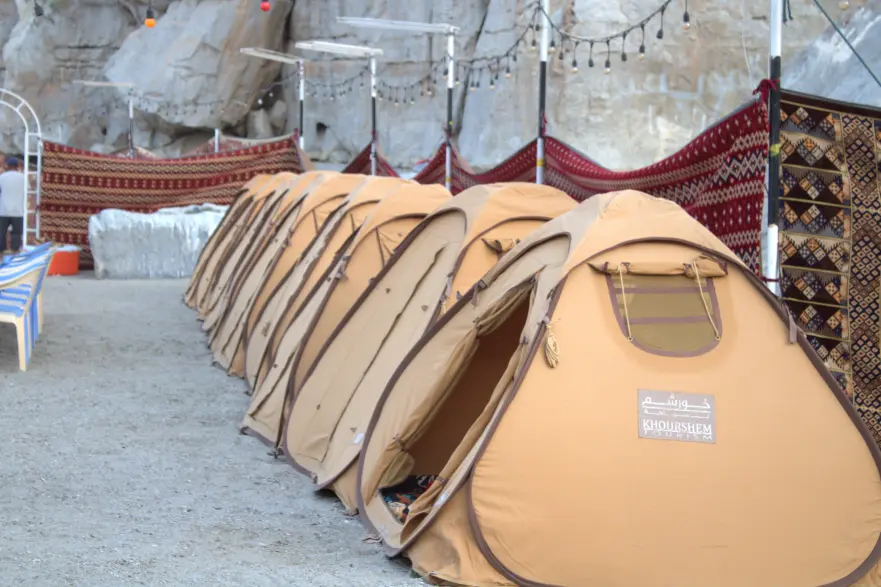
The tents and mats are ready before you even think about sleeping. Most guests fall asleep earlier than they expect because the waves stay steady through the night. Morning comes in softly: the light first touches the water, then the cliffs, and everything brightens slowly. Breakfast is simple and warm. When the boat arrives, the fjords look different in the morning light, and the ride back feels quiet in a pleasant way.
Life in Musandam has always followed the sea. Before roads were carved through the mountains, boats were the only link between small villages. Fishing shaped daily routines, and the fjords became natural paths people used for work, travel, and everything in between. The Strait of Hormuz brought traders from Persia, Arabia, East Africa, and India. They carried goods but also stories and habits that blended into the culture over time. You can still see hints of that mix today: in the older homes, the simple dishes people cook, and the way locals talk about the water.
Back then, the wooden dhows you see all over Musandam were very important. They transported livestock, fish, supplies, and occasionally whole families. Building one took practice and time, and many families kept the skills within their own circles. Even now, with modern boats around, the dhow still feels like a symbol of the region’s patience and steady way of life.
Camping on a Musandam beach puts you in the middle of all that history without trying. The cliffs look almost the same as they did generations ago, and the sea still sets the rhythm. That sense of something old and unchanged is part of what makes the experience memorable.
Bring a passport valid for at least three months. UAE residents must also carry their original Emirates ID for the border process.
Yes. The campsite is on a quiet, sheltered beach picked specifically because it’s safe and comfortable for overnight stays.
Booking is easy. Most guests choose the shared overnight camp, but private setups can be arranged when needed. Tents, mats, blankets, dinner, breakfast, all of that is provided, so you only need your personal items. Once your date is confirmed, the team shares the meeting point, timing, and what to expect. The whole thing stays simple and relaxed, matching the feel of the experience.
| Departure & Return Location | Khasab Musandam Dhow Port (Google Map) |
|---|---|
| Departure & Return Time | 10:00 AM – 09:00 AM 05:00 PM – 04:00 PM |
| Price Includes |
|
| Price Excludes |
|
| Kids Policy |
|
| Tour Activities |
|
Do not hesitate to call us. We are an expert team and we love to talk to you.


If you’re coming from Dubai, it usually takes around 3.5 hours to reach Khasab, so leaving before 6:00 AM helps you arrive on time. Guests joining the morning session should reach the meeting point by 9:30 AM to get a quick briefing and understand how the trip will run.
If you’ve booked the evening session, you should arrive by 4:30 PM, and the trip will begin at 5:00 PM.
The full-day cruise starts at 10:00 AM. The crew welcomes everyone on board and helps you settle in. As soon as the dhow leaves the port, the staff begins serving cold drinks, tea, coffee, fresh fruits, and Omani tea throughout the cruise.
If you spent the previous night at the campsite as part of the package, the team picks you up by boat from the beach and continues the cruise from there.
As the dhow enters the Musandam fjords, this is when dolphin sightings often begin. They sometimes swim close to the boat, creating some of the best moments of the day. Keep your camera ready – these glimpses often happen suddenly.
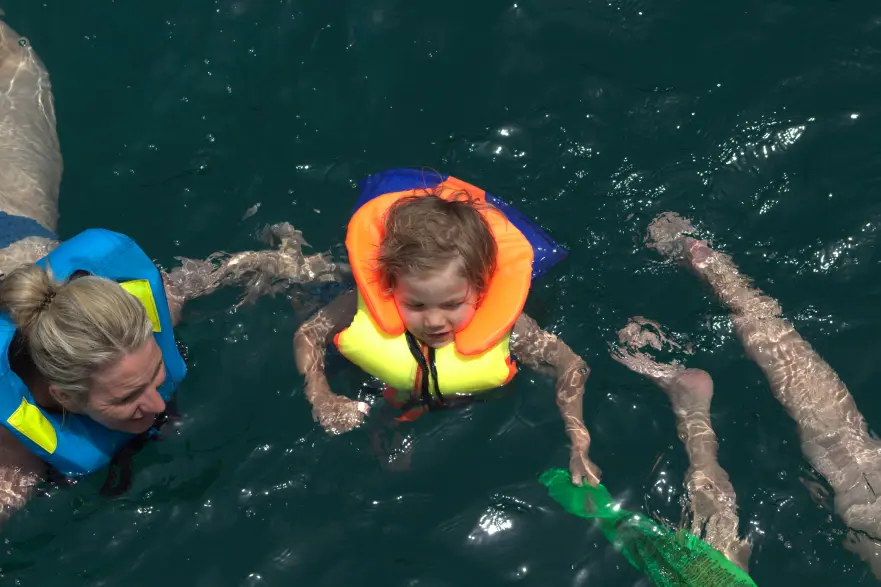
The first stop is near the historic Telegraph Island, well-known for its clear water. Guests can swim or snorkel here. Snorkeling gear and life jackets are provided, but make sure you bring your own swimwear.
A traditional Omani lunch is served on the dhow. It usually includes rice, fried chicken or fish, vegetable gravy, fresh salad, Arabic bread, hummus, and soft drinks. The crew prepares everything fresh, and special items can be arranged for private tours if requested earlier.
At Seebi Island, guests get another chance to swim or snorkel. The water here is calm and clear, making it easy to spot colorful fish and enjoy your final swim of the cruise.
Around 4:00 PM, the dhow reaches the beach campsite. The full-day cruise ends here, and the overnight camping experience begins. The crew welcomes guests, gives a quick overview of the campsite, and helps set up the tents and evening arrangements.
Dinner is served at the campsite, a pre-prepared BBQ meal – grilled chicken kebab, fish, beef kebab, rice, and fresh salad.
After a quiet night by the sea, a simple breakfast is served in the morning. It includes bread, boiled eggs, jam, yogurt, bottled juices, water, tea, and coffee. Guests can take their time enjoying the calm start to the day.
At around 8:30 AM, the speedboat arrives to take guests back to Khasab Dhow Port. The ride is short and scenic, giving you one last look at the fjords before the trip comes to an end.
What to Pack for the Trip
Bring sunscreen, a towel, swimwear, light clothes, a small flashlight, and personal items you prefer having with you.
Best Time to Visit Musandam
October to April offers cooler weather, calm water, and comfortable nights—ideal for camping.
Important Considerations for Comfort
Carry needed medication, a refillable bottle, and a light jacket for the evening breeze.
Etiquette and Respect for Local Customs
Dress modestly near villages, keep noise low at night, and ask before taking photos of people.
Yes, it can be arranged if requested.
Yes, when sea conditions are safe.
Yes, all tents and sleeping gear are provided.
It’s a quiet, sheltered location selected for comfort.
Yes, with advance notice.


“Communication with Dhow Khasab was seamless, and they were incredibly accommodating. The cruise was an amazing experience — breathtaking, untouched landscapes, dolphins, and fantastic snorkeling spots. We felt like we had the sea to ourselves, with very few other tourists around. The boat was beautiful, the crew was wonderful, and the fresh food was delicious. We spent the night on board, and our kids didn’t want to leave!”


“Perfect Family Day - wonderful boat trip with close-up dolphin viewing and snorkeling in Azur blue waters. Pickup, border crossing and timing for the day worked line clockwork.”

“24h hors du temps. Une déconnexion totale pour se retrouver en famille dans un cadre magnifique. L’accueil est super, le bateau nous attendait à l’heure. À bord des fruits et des boissons fraîches tout le temps. La nourriture est très bonne. Les deux membres d’équipage sont très discrets et s’occupent de nous faire passer un agréable moment. Nous recommandons vivement cette compagnie.”
“Me and my friends book the overnight dhow cruise every year with Dhow Khasab Tours. We have the same crew every year and we can't fault them, they are so attentive providing us with water and snacks throughout the day, a wondeful lunch, dinner and breakfast the next morning! The price is so reasonable for such a wonderful experience. Myself and my friends make new memories every year that last a lifetime! Thank you Dhow Khasab Tours, see you next year!”

“We had an amazing overnight stay, beautiful and clean boat, great service, loved the food. Thank you so much Dhow Khasab Tours for your professional service.”

“Fantastic overnight excursion, beautiful scenery, dolphins, caught some squid, and the swimming was fantastic. The cabins have air-conditioning, while not luxurious, they're perfectly fine after a day's adventure. Shower and bathroom on each room of the larger Dhow boat. Definitely a trip we will do again next year.”

“Amazing experience with great tour guides and beautiful, traditional boat. We saw many fish, dolphins and breathtaking nature. I can really recommend this trip.”

““Fantastic overnight excursion, beautiful scenery, dolphins, caught some squid, and the swimming was fantastic.””